How to Start Day Trading From Scratch in 2026 With a Small Account
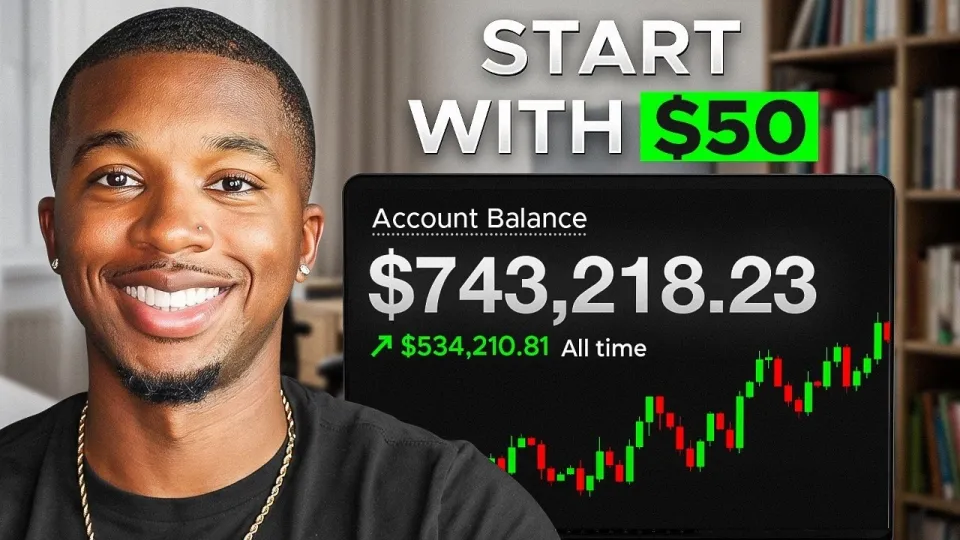
Video: Easiest Way To Start Day Trading From Scratch (Exactly What I Did)
Need articles like this for your video? They help promote it on YouTube and Google — order them in the Telegram bot @sat_sit_bot. Articles with your video embedded are written and posted by the bot itself — on popular topical sites (no ads). Try it free: 50 articles on us.
· based on the channel Jooviers Gems
Day trading from scratch means choosing one market, learning price structure and a fixed risk rule, backtesting a written plan, and only then trading real money — most beginners skip straight to live trading and lose their account within weeks. The fastest realistic path is to treat the first 60–90 days as unpaid training: study, backtest, and demo trade until the process is boring and repeatable. If you want to follow the exact trades and course structure behind the breakdown below, the author shares them through his Inner Circle.
What day trading actually is and what it is not
Day trading is opening and closing positions inside the same session, so you never carry overnight risk — no gap risk from earnings, central bank surprises, or weekend news. That single rule is why day trading fits people with small accounts and day jobs better than swing trading or long-term investing. It is not a get-rich shortcut: the edge comes from repeating a small statistical advantage hundreds of times, not from one big win. A realistic beginner target is not a monthly income figure, it is a positive expectancy after fees and commissions.
Two structural facts shape everything else. First, leverage is the tool that makes small accounts viable, and it is also the tool that destroys them — a $500 account with 100:1 leverage can lose everything on a single oversized position. Second, most retail day traders who fail do so from inconsistent position sizing, not from a bad strategy. Fix the sizing and even an average setup becomes survivable.
Choosing one market instead of ten
Beginners lose months by jumping between stocks, crypto, forex, and options in the same week. Pick one instrument and stay with it long enough to learn its personality.
- Futures (NQ, ES, or micro contracts MNQ and MES) — one chart, tight spreads, no overnight risk, and micros let you trade the same instrument with a fraction of the margin.
- Forex majors (EUR/USD, GBP/USD) — 24-hour sessions, low minimum deposits, and easy access through brokers.
- Large-cap stocks — the most familiar, but the pre-market gappers require a scanner and faster decision-making.
Micro futures are the most common starting point for a small account because the contract size makes risk math simple: one MNQ point is $2, so a 20-point stop is $40 of risk. That number is knowable before you click, which is exactly what you want.
The three skills to learn before you risk a dollar
Every other indicator is optional; these three are not.
- Candlestick reading. A candle shows four prices: open, high, low, and close. A long body means one side controlled the session; a long wick means price was rejected at that level. You do not need 20 patterns — you need to recognise who won the last few candles.
- Support and resistance. Mark the levels where price previously reversed or consolidated, then trade reactions at those levels rather than in the middle of nowhere. Fewer, cleaner levels beat a chart covered in lines.
- Risk per trade. Decide the dollar amount you are willing to lose before entry and place the stop there. If the stop distance is too wide for your risk budget, the trade is too big — skip it or size down.
A simple beginner template: trade only the first two hours of the session, take one setup type (for example, a break and retest of a prior level), and stop for the day after two losses. Constraints are not a limitation, they are the training wheels that keep you alive long enough to improve.
Backtesting and demo trading before going live
Backtesting means replaying historical charts and recording what your rules would have produced. Do at least 100 trades on paper and log four columns: date, setup, result in points or pips, and whether you followed your rules. If you broke a rule and still won, mark it as a loss of discipline — the outcome does not matter, the process does.
After backtesting, trade a demo account for roughly 30 days with the same position size and session times you will use live. The goal is not profit, it is proving you can execute the plan without improvising. A demo account that shows $8,000 of gains means nothing if you took trades that are not in your plan; the number that matters is how many of your logged trades followed the rules.
Only move to real money when three conditions are true: you have a written plan, you have followed it for 30 consecutive demo sessions, and your risk per trade is 0.5%–1% of the account. Start with the smallest size your broker allows, even if it feels pointless.
How prop firms change the math for small accounts
A prop firm evaluation lets you trade the firm's capital for a one-time fee instead of funding a large personal account. You pay for the challenge, hit a profit target without breaching a maximum drawdown or daily loss limit, and then trade a funded account while keeping a share of the profits. For someone with $500, this is often a better route than risking that $500 directly, because the evaluation forces you to respect drawdown rules.
The trade-off is real: rules are strict, most participants fail, and a reset fee is another cost. Treat the evaluation as a paid exam for your process, not as a lottery ticket. If you cannot pass a demo phase with your own rules, you will not pass a funded challenge with someone else's.
Common beginner questions and mistakes
Most doubts beginners raise are the same ones: how much money do I need, how long until I am profitable, and whether a paid course is worth it. On capital, you can start learning with a few hundred dollars, but you cannot start earning meaningfully with it — the first account's job is to teach execution, not to pay rent. On timelines, expect months of screen time before consistency, and treat any account that doubles in a week as a warning rather than a milestone.
On paid education, the honest answer is that structure saves time and free content can work if you are disciplined about building your own curriculum. What does not work is buying a course and skipping the backtesting. Also avoid comparing your results to social media screenshots: winners post, losers do not, and the visible track record is a biased sample. The one habit that separates people who last from people who quit is a trading journal — every entry, every exit, and the reason for both.
Useful links
- Inner Circle (all trades and course access): https://www.getgemify.com/innercircleo?el=youtube_organic
- Instant funding to trade with: https://www.theedgefunder.com/
- Community Discord: https://discord.gg/WpJXHKK7f2
- Recommended forex broker: https://herofx.co/joovier/
- Instagram: https://www.instagram.com/joovier_
The bottom line on starting day trading
Starting day trading from scratch is a process, not a purchase: pick one market, learn candlestick structure and support and resistance, fix your risk at 0.5%–1% per trade, backtest 100 setups, and prove the plan on a demo for a month before funding anything. Prop firm evaluations are a legitimate way to trade larger capital with a small deposit, but they only work if your process already works. The channel Jooviers Gems walks through this exact beginner path in its breakdown of starting day trading with no experience, including the parts most educators skip — the losing streaks and the discipline required to survive them. If you want to follow the same trades and structure, start with the Inner Circle and treat the first 90 days as tuition, not income.
Key takeaways
- Pick one market first — futures like NQ and ES or a single forex pair — instead of scanning hundreds of tickers.
- Learn three things before risking money: candlestick structure, support and resistance, and a fixed risk per trade.
- Backtest a written plan for at least 100 trades before going live, then trade a demo for 30 days.
- Risk 0.5%–1% of the account per trade so a losing streak of 10 trades does not end the account.
- Prop firm evaluations let beginners trade firm capital for a one-time fee instead of funding a large personal account.
Source: Easiest Way To Start Day Trading From Scratch (Exactly What I Did) · Markdown version
Questions & answers
How much money do I need to start day trading?
You can begin learning with a few hundred dollars, especially in forex or micro futures where margin requirements are small. However, that capital is for training execution, not for income — treat it as tuition. A more useful milestone is proving a repeatable process on a demo account before adding money.
How long does it take to become consistently profitable?
Plan for several months of screen time, backtesting, and journaling before consistency appears, and expect setbacks along the way. Traders who rush usually blow an account and restart. The realistic measure is not how fast you profit but how long you can follow your own rules without improvising.
Is a prop firm challenge better than trading my own small account?
A prop firm evaluation lets you trade firm capital for a one-time fee, which is attractive when your personal account is small. The catch is strict drawdown and daily loss limits, so most participants fail. It works best as a paid exam for a process you have already proven on a demo.
Do I need a paid course to learn day trading?
Not strictly — free content can work if you build your own structured curriculum and actually backtest it. A paid course mainly saves time by giving you an order of operations. What never works is buying education and skipping the practice, because execution is the skill that pays.